How To Plan A Practical Crossbody Bag For A City Weekend
A practical step-by-step guide to how to plan a practical crossbody bag for a city weekend, including preparation, instructions, common issues, tips, and next steps.
How To Plan A Practical Crossbody Bag For A City Weekend
Planning a practical crossbody bag for a city weekend means balancing comfort, security, and easy access to your daily essentials. This guide walks you through choosing the right size and material, organizing your items, wearing the bag correctly to reduce strain, and keeping your belongings safe in crowded areas. You'll learn how to pack light, adjust the strap for a natural fit, and use all pockets effectively. It also covers quick fixes for common problems like a slipping strap or a bag that feels heavy, plus advanced tips for hands-free convenience and quick access to your phone or transit card. End with a final checklist so you can pack with confidence and enjoy your weekend without hassle.
Fast Answer
- Pick a crossbody bag that is lightweight, water-resistant, and about the size of a small book or tablet. It should have a secure zipper, an adjustable strap, and at least one interior pocket for organization.
- Pack only your phone, wallet, keys, a small water bottle, a portable charger, and a light layer like a scarf or compact umbrella. Wear the bag across your body with the strap snug enough to keep it close, but not tight against your chest.
Before You Start
- Measure your daily carry items to know the minimum bag size. Lay out everything you'll need and check that they fit comfortably without overstuffing, which can strain the zipper and make the bag bulky.
- Choose a bag with an adjustable strap that can be worn across your body. A strap width of at least 5 centimeters (about 2 inches) helps distribute weight evenly and prevents digging into your shoulder.
- Test the strap length for your height. For a shoulder bag, the bag should rest on your side, just below your waist, so you can reach it easily without pulling the strap too tight.
- Check the closure type. A full zipper is more secure than a magnetic snap or open top. If you prefer a flap, ensure it covers the opening completely so items can't fall out when you bend over.
Step-by-Step Instructions
Choose the Right Size and Material
Begin by selecting a bag that fits your daily essentials without excess space. A crossbody bag that is too large encourages overpacking, which adds weight and makes it cumbersome. A good size is one that can hold a small water bottle, a wallet, a phone, and a light layer like a scarf or a compact umbrella. Look for a water-repellent material such as coated canvas, nylon, or polyester, which protect your belongings from unexpected rain. Avoid heavy leather or metal hardware that adds unnecessary weight. Check the weight of the empty bag; you want it to be under 500 grams if possible, so you can carry more items comfortably. The interior should have at least one divided pocket or a small zippered pocket to keep small items like earbuds or hand sanitizer from getting lost at the bottom. A matte finish or subtle pattern also helps disguise wear and tear from city life.
Pack Your Essentials in a Smart Order
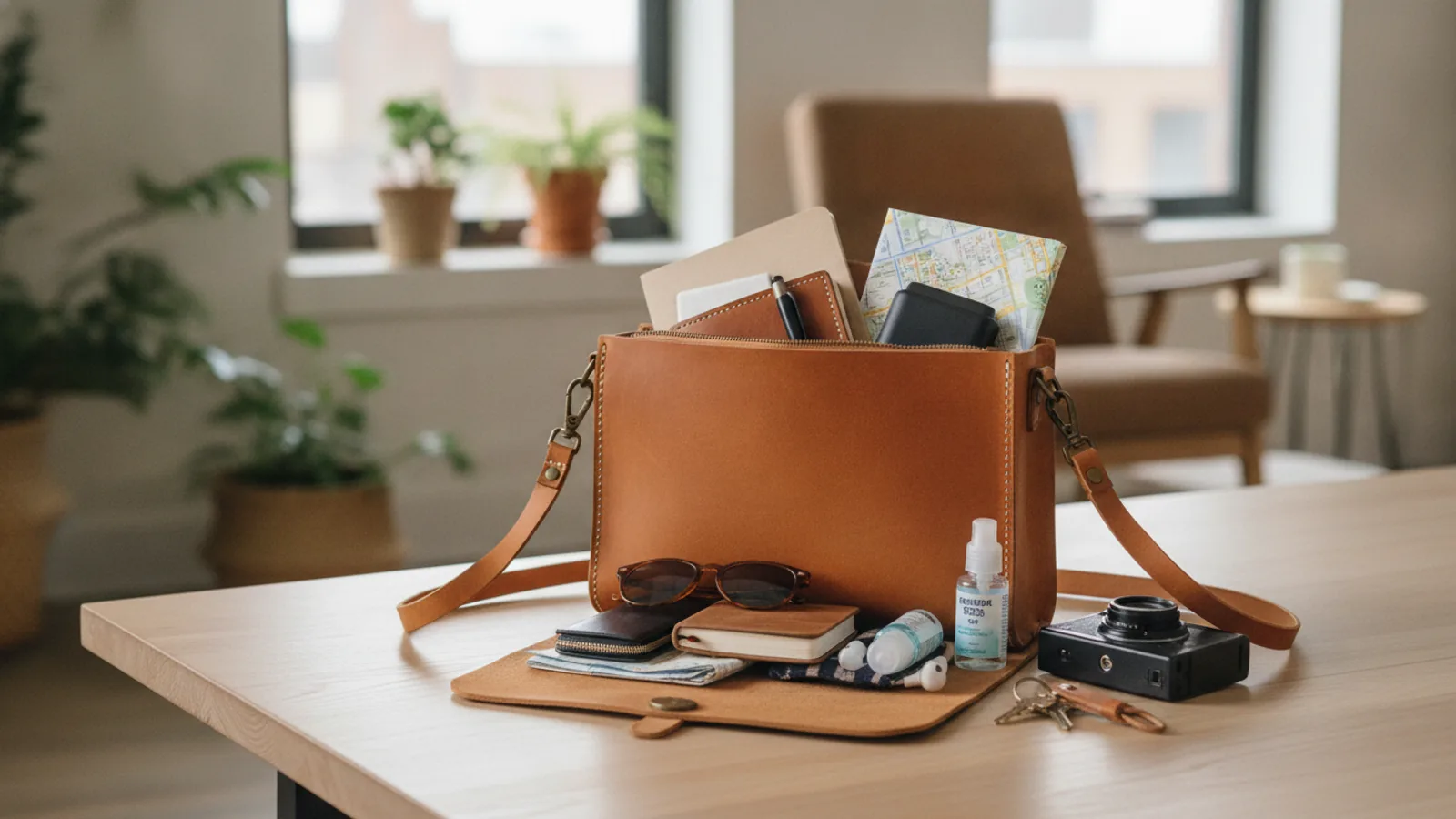
Pack items you need often on top or in easy-to-reach pockets. For example, keep your phone in a side pocket or the main flap if it has an outer zip, so you can pull it out without opening everything. Your wallet should be in the main compartment, but if it is thick, place it at the back, flat against the bag. Keys go in a dedicated small pocket or clipped to an internal key leash to prevent scratching your phone. Place your water bottle vertically on one side, with a scarf or small umbrella on the other to balance the weight. Heavy items like a portable charger should sit near the center of your back to reduce strain. Avoid putting anything sharp or bulky near the closure, as it can gum up the zipper. Finally, do a quick shake test: if you hear things sliding, rearrange them or add a small pouch to keep quiet and stable.
Adjust the Strap for a Secure Fit
Put on the bag with the strap over your head, so it rests on the opposite shoulder from your dominant hand. For example, if you are right-handed, let the bag sit on your left side. Pull the strap until the bag feels snug against your body, just below your armpit and above your waist. The bag should not swing more than a few centimeters when you walk. If it does, shorten the strap. A quick check: stand straight, and the bag should not pull your shoulder forward or dig into your neck. If it does, lengthen the strap slightly. Also, ensure the strap is padded or at least wide enough to distribute weight. You should be able to move your arms freely and bend over without the bag sliding up. If you will be walking for hours, adjust the strap so your posture stays natural, and take off the bag when seated to let your shoulder rest.
Use All Pockets for Organization
A crossbody bag often has several compartments, so assign each one a specific purpose. Use the rearmost pocket against your body for items you don't need often, like a passport or a small pack of tissues. The front pocket or any outer zip pocket is for high-frequency items: your transit pass, a lip balm, or earbuds. Inside, the main compartment is for your wallet, phone, keys, and a portable charger. If there is a small slip pocket, keep a slim notebook and pen there. Avoid tossing items loosely into the main area; instead, use pouches or small zippered bags to group similar items, like cables and chargers. This not only keeps you organized but also makes it quicker to find things. Also, be mindful of which side faces forward; you want your most-used items on the side that opens outward, so you can access them with one pull of the zipper.
Wear It Comfortably for Long Periods
To avoid shoulder strain during a full day of exploring, adjust the strap to keep the bag at the natural curve of your body, not too low on your hip. A bag that rests too low pulls your shoulder down and makes you slouch. Switch sides every hour or so to balance the load. If the strap is narrow, you can pad it with a foam pad or a clothes hook to widen the pressure point. For additional comfort, carry a small backpack as a secondary option? No, stick to a single bag. But you can alternate between wearing the crossbody as a shoulder bag (over one shoulder) and across the body to give your back a break. Be mindful of how you move: don't let the bag hang while you're bending or reaching. When you sit down, take the bag off and place it on your lap or between your feet, not on the back of a chair where it can be left behind.
Secure Your Belongings in Crowds
When in busy areas like markets, train stations, or festivals, keep the bag in front of you, with the zipper facing forward and your hand resting on it. This makes it harder for someone to open it unseen. If the bag has a zipper, use a small carabiner to clip the zipper pulls together, or add a tiny padlock if you prefer. Do not keep your passport or extra cash in an easily accessible outer pocket; store them in a hidden inner pocket or a money belt worn under your clothes. When you're in a café or restaurant, loop the strap around your chair leg or the table leg, not just over the back. If someone bumps into you, immediately check that your bag is still closed and secure. Practicing these habits will make your city weekend more relaxing.
Quick Reference
| Situation | Action | Why it helps |
|---|---|---|
| Your crossbody bag keeps sliding forward on your chest, making you feel off-balance. | Tighten the strap so the bag rests higher, just under your armpit, and pull the bag around your body so it lies closer to your hip or lower back. Check that the strap is evenly positioned across your torso. | A snugger fit centers the weight over your body's natural support points, reducing strain and preventing the bag from pulling you forward as you walk. |
| You need to quickly get your transit card while queuing at a busy entrance. | Keep your transit card in a dedicated pocket on the side of the bag that is closest to your hand (e.g., the right-hand side if you are right-handed). Before leaving, test that you can unzip and retrieve it with one motion without taking off the bag. | Having it in a predictable, easy-to-reach spot saves time and keeps you from digging around, which also minimizes the time your bag is open and exposed. |
| You are walking for hours and feel the strap digging into your shoulder, causing discomfort. | Shorten the strap to raise the bag, and if the strap is thin, place a small folded cloth or padding under it on your shoulder. Switch the bag to the other shoulder every 30 minutes. If the bag is heavy, remove a few items and carry them in a light tote. | Adjusting the strap distributes weight more evenly and allows you to alternate sides, giving your muscles a break and preventing chafing or a sore shoulder. |
Common Issues
- The bag's strap keeps slipping off your shoulder, especially when you're walking fast.: Use a non-slip shoulder pad or a strap with a rubbery underside. Ensure the strap is properly adjusted so the bag sits at hip height, not too low. If it still slips, wear the bag across the body instead of over one shoulder; the crossbody position naturally prevents slipping.
- You can't find small items like your lip balm or earbuds at the bottom of the bag.: Add small pouches or zip-top bags to group similar items. Keep a dedicated mini pouch for small essentials and place it in a specific pocket. Also, consider using a wallet with a coin pocket for tiny things or attaching a keychain to a loop so it stays near the top.
- The zipper gets stuck or jams, making it difficult to open or close the bag.: First, check if any fabric or thread is caught in the zipper teeth. Gently pull the zipper back and forth while holding the fabric away. If it's still stiff, apply a little soap or wax to the teeth (like from a candle) to lubricate. Avoid pulling too hard, as that can bend the zipper. If the zipper is damaged, replace the bag or have it repaired.
Advanced Tips
- Use a carabiner to clip the zipper pulls of two compartments together, so a pickpocket would need two hands to open them, giving you more time to notice.
- Attach a small rollable water bottle to the bag with a clip or a loop, so you can carry water without taking up interior space. Choose a collapsible design to save room when empty.
- Practice the 'front swing' technique: when moving in a crowd, use your forearm to keep the bag pressed against your body, and with your hand on the zipper, you can subtly check it without stopping.
Final Checklist
- Pack only the essentials: phone, wallet, keys, a small water bottle, and a minimal hygiene kit—leave out items that add weight.
- Adjust the strap so the bag fits snugly across your body, just below your armpit, and test walking for a few minutes to ensure comfort.
- Organize pockets: put frequently used items in the topmost or outer pocket, and keep valuables in a zippered interior pocket.
- Secure the bag in crowds: position it in front, keep zippers closed and-facing forward, and hold the strap or bag when standing still.
FAQ
How much weight can I safely carry in a crossbody bag without hurting my shoulder?
It's best to keep the total weight under 1 kilogram (2.2 pounds) for daily use. To test, fill your bag with your essentials and check if the strap digs into your shoulder. If it does, remove non-essential items or consider a wider strap. Remember, weight distribution matters: carry heavy items close to your body's center, like near your backside, to reduce strain.
Is it better to wear the bag across the body or over one shoulder for a city weekend?
Across the body is generally more secure and comfortable for long periods because it keeps the bag close and prevents it from swinging. It also distributes weight across your torso, reducing shoulder strain. Over one shoulder is fine for short trips, but for full-day walking and crowded areas, the crossbody style is recommended.
What are the best pockets to use for a phone and a transit card?
Use an outer pocket that is accessible without unzipping the main compartment, like a back pocket or a front flap pocket. This allows you to reach your phone quickly and easily. For a transit card, the same pocket or a dedicated side pocket works well. Avoid putting them in the main area where they can be buried and harder to grab. Always return them to their designated pockets after use to maintain organization.