Common Mistakes When Planning Caring For Leather Shoes Through Wet Weather
A practical step-by-step guide to common mistakes when planning caring for leather shoes through wet weather, including preparation, instructions, common issues, tips, and next steps.
Common Mistakes When Planning Caring For Leather Shoes Through Wet Weather
Caring for leather shoes in wet weather requires a plan that goes beyond a quick waterproofing spray. Common mistakes include ignoring the leather type, applying products to dirty or wet shoes, skipping regular conditioning, and drying shoes near heat sources. This guide walks through preparation, daily care, drying, and long-term maintenance so your leather shoes stay supple and well-shaped through rain, slush, and damp conditions. It also addresses storage, salt stains, and emergency care, helping you avoid cracking, staining, and odor. With a clear routine and a few essential tools, you can protect your investment and keep your footwear looking sharp even when the forecast is grim. The key is to build habits that respond to the weather rather than react to damage after it occurs.
Fast Answer
- Before rain season, clean and condition your leather shoes, then apply a water-resistant wax or spray, testing it on a small area first.
- After each wet wear, let shoes air dry at room temperature away from heat, brush off dirt, and reapply conditioner or waterproofing as needed.
Before You Start
- Check the leather type: smooth leather, nubuck, and suede need different care products, so read the care label or identify the finish before buying anything.
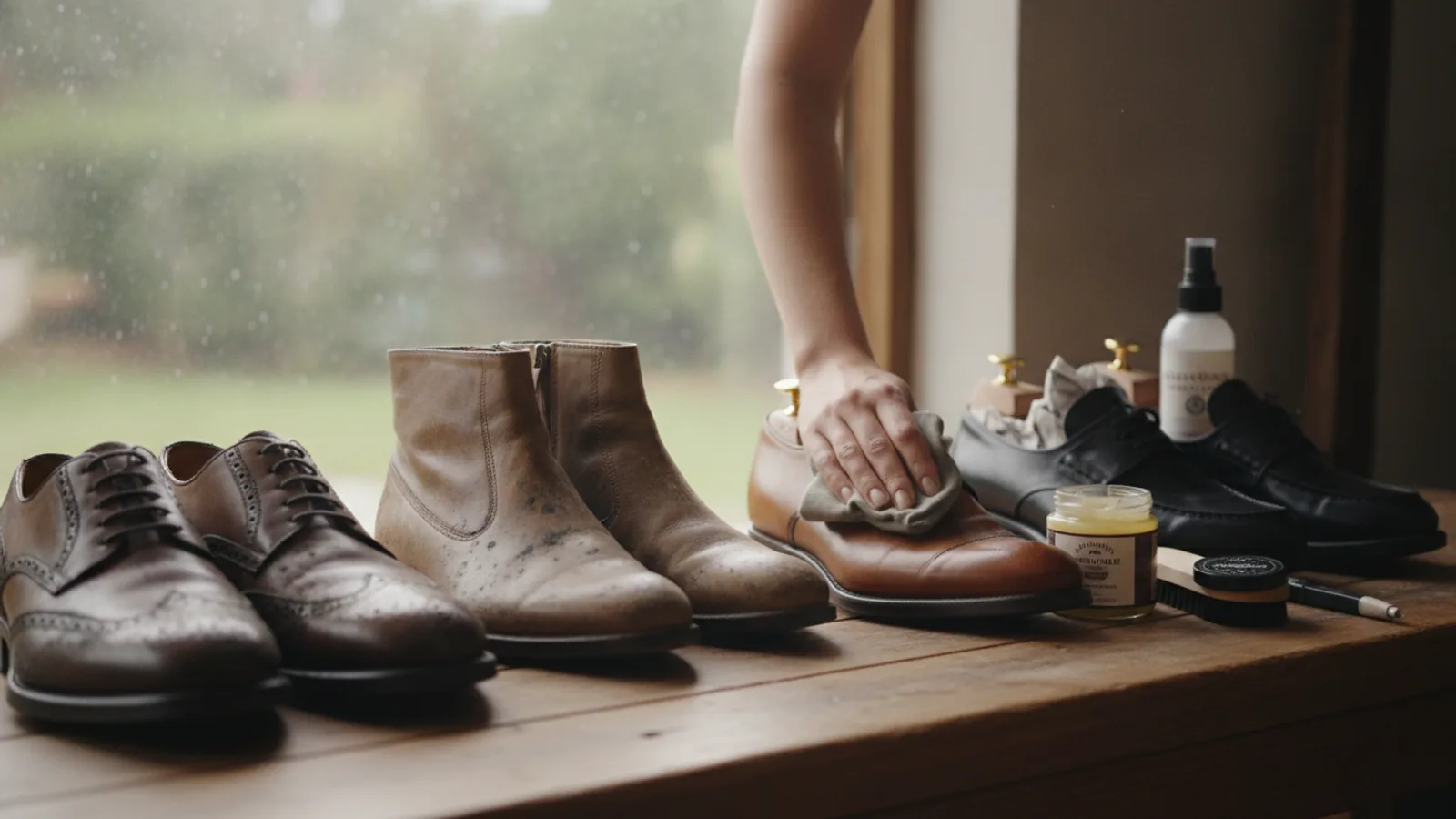
- Assemble a full care kit: soft brush, damp cloth, leather cleaner, conditioner, waterproofing spray or wax, and a shoe tree for drying and shaping.
- Clean shoes thoroughly before any treatment, because dirt and dust block the pores and prevent conditioners and waterproofing from absorbing properly.
- Set up a drying area away from radiators, heaters, or direct sunlight, with good air circulation and space for one or two pairs of shoes to dry slowly.
Step-by-Step Instructions
Assess the leather and current condition
Start by looking at your leather shoes and determining the exact finish. Smooth, full-grain leather is the easiest to protect, while nubuck and suede are more delicate and require a special spray. Also inspect the soles and the stitching at the edges, because water can enter through gaps if the stitching is worn. Write down the leather type and any current issues like dry patches or color loss. If the shoes are brand new, you can treat them immediately, but if they are old, you may need to deep-clean first. This assessment takes five minutes and prevents you from using the wrong product or skipping important repairs. You can also fix a loose sole or frayed stitching before the rain season begins, which avoids water seeping in unnoticed.
Clean the shoes thoroughly and allow to dry
Remove the laces and any dirt or mud with a soft brush or a dry cloth. For smooth leather, mix a tiny drop of mild soap with water, dip a cloth into the solution, wring it out well, and wipe the entire shoe. For suede or nubuck, use a specially designed suede brush to lift dirt and revive the nap. Do not use plain water on suede unless absolutely necessary, because wet stains may become permanent. After cleaning, wipe away any soap residue with a separate damp cloth, then stuff the shoes with crumpled newspaper or insert shoe trees. Let them dry naturally at room temperature for at least a few hours, or overnight if they are very damp. Never dry them near a heater, because heat will crack the leather. This thorough cleaning prepares the surface so that conditioners and waterproofing can bond properly.
Apply conditioner to nourish the leather
Once the shoes are completely dry, apply a leather conditioner that matches the leather type. Use a soft cloth or a sponge, take a small amount of conditioner, and work it into the leather using small circular motions. Pay extra attention to the areas that bend when you walk, like the toe box and the heel area. The conditioner restores oils and fats that keep leather supple, preventing cracks when the leather flexes in wet conditions. Do not overdo it – a thin, even layer is enough, and you can wipe off any excess with a clean dry cloth. Let the conditioner absorb for about 10 to 15 minutes. If you have nubuck or suede, choose a spray conditioner that is designed for delicate surfaces. Allow the shoes to dry completely after conditioning, usually at least another hour.
Apply waterproofing spray or wax correctly
When the conditioner has dried, apply a waterproofing product that suits your leather. For smooth leather, beeswax-based sprays or creams work well; for suede or nubuck, choose a silicon-based spray that protects without darkening the nap. Hold the spray canister about 15 to 20 cm away from the shoe and apply a light, even coat, covering the entire upper. Do not saturate the leather, because the product may leave a sticky residue. Let the first coat dry for at least 15 minutes, then apply a second thin coat. For wax it is a solid, rub it on with a cloth in small circles, then buff lightly with a clean cloth to remove excess. Always test the product on a small hidden area first to check for color changes. The waterproofing creates a barrier that causes rain to bead up and roll off rather than soaking in.
Dry wet shoes properly after each wear
If your shoes get wet, act immediately. Remove the laces and any insoles, then wipe off excess moisture with a dry cloth. Stuff the shoes with crumpled newspaper or insert cedar shoe trees – these help them hold their shape and absorb moisture from the inside. Replace the newspaper after it becomes damp, and let the shoes air dry at room temperature in a well-ventilated area. Do not place them near a radiator, heater, or in direct sunlight, as this will dry the leather unevenly and cause cracking. Also avoid using a hairdryer or placing them on a hot surface. Drying slowly is key to prevent the leather from stiffening. Once the shoes are fully dry – usually after 12 to 24 hours – brush off any dried dirt and then reapply a thin layer of conditioner to replenish oils that may have been lost. This routine prevents permanent water damage and keeps the leather flexible.
Store and maintain leather shoes in wet season
After cleaning and conditioning, store your leather shoes in a cool, dry place away from direct heat and sunlight. Use shoe trees or stuff them with acid-free tissue paper to help preserve their shape. If you are storing them for a longer period, place them in a breathable cloth bag or a cardboard box with holes, never in an airtight plastic bag, which can trap humidity and promote mold. During the wet season, check your shoes every week for signs of mold or mildew, especially if the wardrobe is damp. To prevent odor, sprinkle a little baking soda inside and let it sit overnight, then shake it out. Once a month or after several heavy wear cycles, repeat the cleaning, conditioning, and waterproofing routine. This consistent maintenance ensures your leather stays protected and looks great despite the weather.
Quick Reference
| Situation | Action | Why it helps |
|---|---|---|
| After coming in from rain, shoes are soaked through and dripping water. | Remove laces and insoles, wipe off excess water, stuff shoes with newspaper, and let them air dry at room temperature away from heat for at least 24 hours. | Newspaper absorbs moisture from the inside, and slow drying prevents leather from cracking and warping. Direct heat would cause irreversible damage. |
| Before a forecast of several rainy days, you want to prepare your favorite leather shoes. | Clean and condition the shoes first, then apply a waterproofing spray or wax evenly in two thin coats, letting each coat dry completely. | Clean and conditioned leather absorbs the waterproofing more evenly, creating a effective barrier that makes rain bead up and prevents stains. |
| You notice white salt stains or water marks on the leather after a wet day. | Make a solution of equal parts white vinegar and water, dip a cloth into it, dab the stain gently, let it sit for five minutes, then wipe clean and let dry. | The acid in vinegar dissolves the alkaline salt residue, while the gentleness of dabbing avoids spreading the stain or damaging the leather surface. |
Common Issues
- Leather shoes that were dried near a heater have become stiff, cracked, and discolored.: You can soften the leather with a rich leather conditioner, applying it generously and massaging it into the cracks. For deep cracks, you might need to use a leather filler, but if the damage is severe, consider having the shoes professionally repaired. Prevention is key: always air dry slowly at room temperature.
- Waterproofing spray has left a white or sticky film on the shoes.: Wipe the surface with a dry cloth to remove any excess product. If it is waxy, lightly reheat the area with a hairdryer on a low setting, while wiping with a cloth. For a sticky residue, you may need to buff with a soft brush or use a leather cleaner to remove the product, then reapply a thin, even coat following instructions.
- Suede shoes have dark water stains after getting wet.: While the suede is still damp, use a suede brush to gently brush the nap in the direction of the fibers. Once dry, you can use a suede eraser to remove any lingering stains. For stubborn stains, hold the shoe over steaming water for a few seconds to raise the nap, then brush and let dry. Never apply water directly to suede.
Advanced Tips
- Use a leather conditioner that contains natural oils like mink or lanolin, but avoid using too much on light-colored leather because it may darken the material. Test a small area first.
- For extra protection, apply a thin layer of clear polish or wax after waterproofing, and then buff to a shine. This adds another layer of defense against moisture and dirt.
- Inspect the stitching and seams of your shoes at the start of the wet season. You can apply a seam sealer or beeswax to the stitching to help keep water from seeping through the threads.
Final Checklist
- Check the leather type and any existing damage before starting, and gather the necessary cleaning and conditioning supplies.
- Clean your shoes thoroughly and let them dry completely at room temperature away from heat before applying any conditioners or waterproofing.
- Apply a conditioner suitable for your leather type and then a waterproofing product in even, thin layers, allowing adequate drying time between each step.
- Establish a routine: after each wet wear, air dry properly, brush off dirt, and reapply conditioner or waterproofing as needed throughout the rainy season.
FAQ
How often should I waterproof my leather shoes in the rain season?
For regular rain exposure, reapplying waterproofing every two to three weeks is a good starting point. However, the exact frequency depends on how often you wear them and the intensity of the rain. A practical test is to drop a few drops of water on the shoe; if the water absorbs quickly instead of beading, it is time to reapply. Remember to clean and condition the leather before reapplying to ensure the product works effectively.
Can I wear leather shoes in heavy rain or puddles?
While you can wear properly treated leather shoes in light to moderate rain, standing water and heavy downpours can still overwhelm the waterproofing. Shoes are not fully waterproof unless they have a built-in membrane, which is rare in leather dress shoes. If you expect to walk through deep puddles or heavy rain, consider wearing rubber boots or shoes with a waterproof lining. If your leather shoes do get soaked, dry them slowly and condition them immediately after to prevent damage.
What is the best way to dry leather shoes after a rainy day?
The best method is to remove laces and insoles, wipe off excess water with a dry cloth, stuff the shoes with crumpled newspaper or insert cedar shoe trees, and then let them air dry at room temperature in a well-ventilated area. Replace the newspaper if it becomes soggy. Do not use heat sources like radiators, heaters, or hairdryers, as they cause the leather to shrink, crack, and stiffen. Allow at least 24 hours for proper drying, then condition the leather to restore moisture.