Common Mistakes When Planning A Practical Crossbody Bag For A City Weekend
A practical step-by-step guide to common mistakes when planning a practical crossbody bag for a city weekend, including preparation, instructions, common issues, tips, and next steps.
Common Mistakes When Planning A Practical Crossbody Bag For A City Weekend
Planning a practical crossbody bag for a city weekend involves more than picking a stylish option. Many travelers fall into common traps such as choosing a bag that is too large, overlooking weight distribution, or failing to secure valuables. This guide helps you avoid these mistakes by focusing on essential features, proper organization, and real-world testing before your trip. You will learn how to select a bag that keeps your essentials accessible, comfortable to wear for hours, and secure in crowded urban environments. By following a step-by-step approach, you can ensure your crossbody bag enhances your weekend getaway rather than becoming a burden. The guide covers everything from assessing your daily carry to adjusting straps and testing access, with practical tips and troubleshooting for common issues.
Fast Answer
- Start by listing everything you truly need for a day out, then measure your items and choose a bag that fits them without excess space, because a too-large bag encourages overpacking and strain.
- Look for a crossbody bag with a comfortable, adjustable strap and multiple secure pockets, and always test it with weight before your trip to ensure it doesn't dig into your shoulder or swing excessively.
Before You Start
- Gather the items you normally carry for a day in the city, such as phone, wallet, keys, sunglasses, a small water bottle, and a light jacket, to estimate the required bag capacity.
- Measure the dimensions of your largest items, especially your phone and wallet, so you can compare them with the bag's internal compartments while shopping.
- Decide on a maximum weight you are willing to carry on one shoulder, keeping in mind that a crossbody bag distributes weight but still adds strain over a long day.
- Set a budget range that is realistic for a quality bag, but remember that durability and comfort are more critical than price, and you can often find good options without overspending.
Step-by-Step Instructions
Assess Your Daily Carry Needs
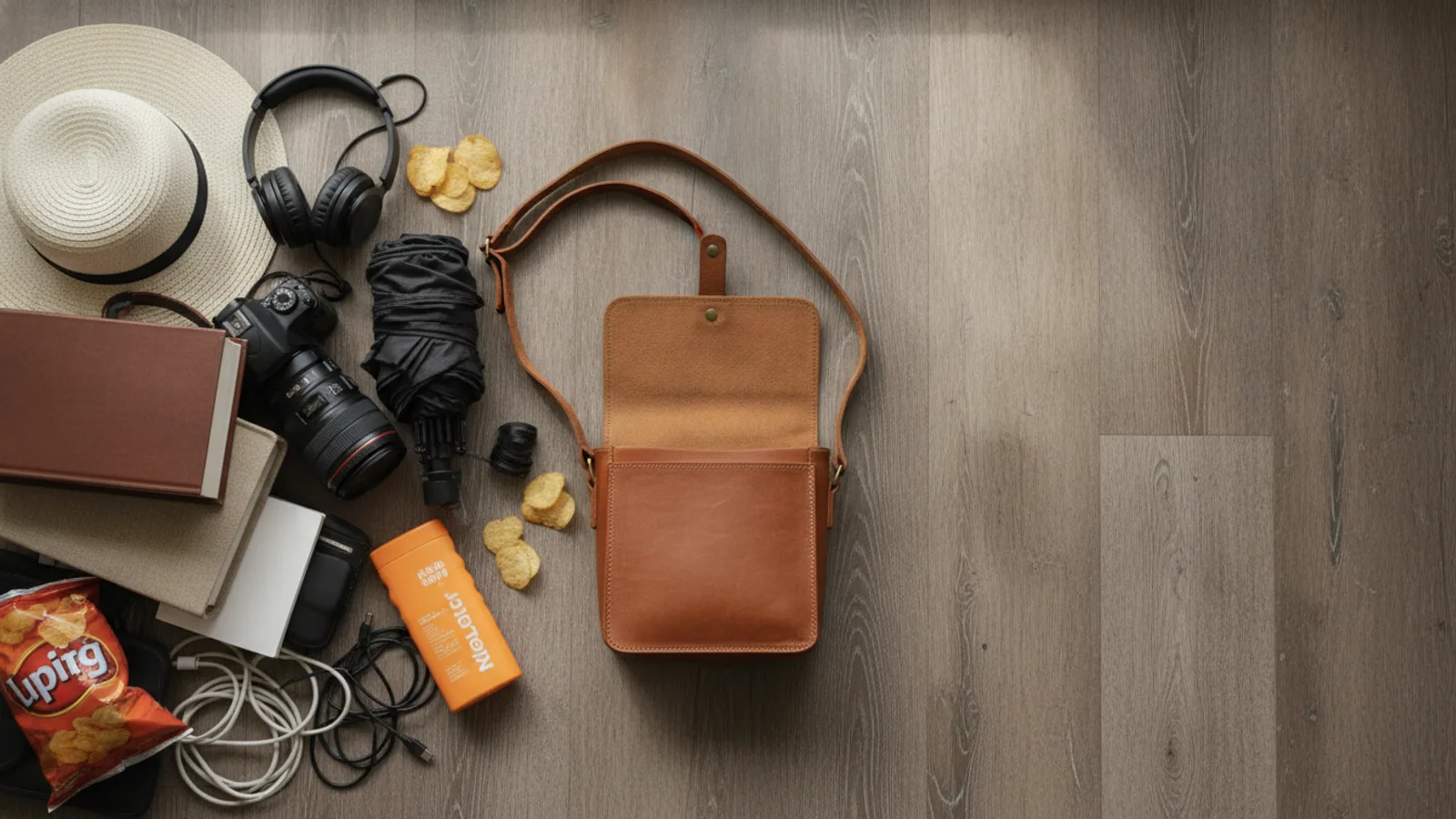
Start by laying out every item you plan to carry during your city weekend, including your phone, wallet, keys, sunglasses, hand sanitizer, portable charger, and any small personal items. Remove items that you rarely use or that duplicate functionality, such as multiple cards or a bulky charger when you have a lightweight power bank. Once you have your list, measure the height, width, and depth of your largest items, especially your phone and wallet, because these will dictate the minimum bag size. Also consider how you access each item: you will need quick access to your phone and transit pass, but you might accept slower access to a first-aid kit. Write down the total volume or simply note the dimensions, and then compare this with potential bags. This step prevents the common mistake of buying a bag that is too large or too small, and it ensures you do not forget essentials. By knowing exactly what you need, you can focus your search on bags that offer appropriate compartments and capacity, avoiding the temptation to overpack or leave things behind.
Choose the Right Bag Size and Shape
Select a bag that is close to your minimum requirements but has a little room for flexibility, such as picking up a souvenir or a snack. The bag should be proportionate to your body: a petite person should avoid an oversized bag that overwhelms their frame and causes imbalance. Look for a rectangular or rounded shape that hugs your body rather than a bulky tote that swings away from you. Check the base and sides to ensure they are structured enough to hold their shape without being rigid, because a floppy bag can make items hard to find. A good rule is to place your packed items inside and see if you can close the zipper easily without forcing it. The bag should not bulge at the seams, as that indicates it is too small or you are overpacking. Also consider the depth: a bag that sticks out too much will hit doorways and crowds, causing annoyance. A slim profile is ideal for navigating busy streets and public transport. Remember that you can adjust your packing list, but you cannot change the bag's dimensions once purchased, so take time to try different sizes.
Examine Strap Comfort and Adjustability
The strap is the most critical feature of a crossbody bag because it determines comfort during hours of wear. Look for a strap that is at least 1.5 inches (about 3.8 centimeters) wide, as thin straps dig into your shoulder, especially when the bag is heavy. The material should be strong and slightly padded or made of a smooth fabric that does not irritate your skin. Check the adjustability: the strap should have enough range to let you wear the bag across your body at your preferred height, typically just above your hip for easy access. A strap that is too short will cause the bag to ride too high, and one that is too long will allow the bag to swing uncomfortably. Also consider the length adjustment mechanism: a sliding buckle is easier to adjust on the go than a series of holes. When you put the bag on, mimic your daily movements—walk, bend, and reach—to ensure the strap does not chafe or slip. If the strap has a non-slip lining, that is a plus because it will stay in place on your shoulder. Remember that you might wear the bag over a bulky jacket, so test with the clothing you plan to wear.
Prioritize Security Features
In a busy city, you need a bag that protects your valuables from pickpockets and accidental losses. Look for a bag with zippered compartments, especially a hidden back pocket that lies against your body, which is ideal for storing your phone or passport. The main closure should be secure, such as a durable zipper that slides smoothly and has two sliders that can be locked together, if you wish. Avoid bags with open tops or magnetic snaps that a thief can silently open. Some bags have RFID-blocking fabric, which can prevent electronic theft, but you can also use a separate RFID sleeve if needed. Check the stitching and zipper quality: a strong bag resists tampering, but a weak zipper can be a liability. Also consider how you carry the bag: a crossbody strap makes it harder to snatch than a shoulder bag, but you should also keep the bag in front of you in crowded areas. Test the zippers to ensure they do not catch, and see if the bag has internal pockets to keep your items organized, reducing the time you spend digging. Security is not just about preventing theft; it also prevents you from dropping items when you are in a hurry.
Plan an Organizational System
An organized bag saves you time and frustration when you need to find something quickly. Look for a bag with multiple pockets, but do not rely on them alone; you can use small pouches or zippered cases to group similar items. For example, keep your charging cable and power bank in one pouch, and your first-aid items in another. Assign a specific pocket for frequently used items like your phone and transit card, so you can grab them without searching. Place your keys in a clip or a designated key holder to avoid scratching your phone or other items. When you pack, put heavier items at the bottom of the bag, closest to your body, to maintain balance. Avoid filling every pocket completely because that makes the bag hard to close and items difficult to retrieve. Periodically during the day, take a moment to re-organize if things have shifted. Also, try to pack your bag the same way every time, so you develop muscle memory and can find items without looking. A well-organized bag also prevents you from losing small things, and it makes security checks easier because you know exactly what is inside.
Test the Bag Before Your Trip
Never use a new crossbody bag for the first time on your actual trip. Instead, do a trial run at home or on a short walk. Pack the bag with everything you plan to carry, including your wallet, phone, keys, and a water bottle, and wear it for at least an hour while doing regular activities like walking, sitting, and climbing stairs. Notice any discomfort: does the strap dig into your neck, or does the bag swing too much? Adjust the strap length and reposition the bag until it feels stable. Check that you can easily access all your items without taking the bag off, as you will need to do this on the street. Practice unzipping and retrieving your phone while the bag is on your body. Also, test the zippers to ensure they do not snag on your clothing. If you have to struggle or feel pain, consider returning the bag and trying a different style. This trial also helps you identify if the bag is too small or too large for your needs. By taking the time to test, you can make small adjustments, such as removing unnecessary items or adding a strap pad, to ensure maximum comfort and function.
Quick Reference
| Situation | Action | Why it helps |
|---|---|---|
| You are about to buy a crossbody bag online without trying it on. | Check the bag's dimensions and compare them with your largest item, and read reviews about strap comfort and adjustability. If possible, order from a store with a generous return policy so you can test it at home. | Online photos can be misleading, and a bag that looks small in pictures might be too large or too small in person; checking measurements and reviews helps you avoid the costly mistake of buying an ill-fitting bag. |
| During a trial walk, you feel the strap digging into your shoulder. | Adjust the strap to distribute the weight more evenly, or add a padded strap cover. If the problem persists, consider carrying less weight or switching to a bag with a wider, cushioned strap. | A strap that digs in can cause pain and make you avoid using the bag, so it is important to address the issue before it becomes a bigger problem on your trip. |
| You are in a crowded market and need to get your phone quickly. | Keep your phone in a dedicated front pocket that you can zip open with one hand, and keep the bag in front of your body while you walk. Practice retrieving it without looking. | In crowded places, fumbling for your phone slows you down and makes you vulnerable to theft, so having a set place for it and quick access is essential for both convenience and security. |
Common Issues
- The bag constantly swings to your side as you walk.: Tighten the strap to make the bag ride higher on your body, and adjust the strap to sit snugly against your hip or lower back. If the bag still swings, consider a bag with a stabilizing strap or a design that hugs the body more closely.
- You cannot find your items because the bag's interior is a black hole.: Use small pouches or zippered organizers to separate items, and place frequently used items in designated pockets. If the bag lacks internal pockets, add a removable organizer or a bright-colored pouch that contrasts with the lining.
- The zipper gets stuck frequently, especially when the bag is full.: First, reduce the load to avoid overstuffing, as a full bag creates pressure on the zipper. If the zipper still sticks, apply a dry lubricant like a graphite pencil to the teeth, and if it continues, consider having the zipper replaced by a professional.
Advanced Tips
- Attach a small flashlight or a LED keychain to an interior loop so you can find items in the dark without using your phone's screen, which can be a hassle and battery drain.
- If you plan to visit places with strict security, such as stadiums, avoid carrying unnecessary metal items and pack your bag so that you can quickly open the main compartment for inspection.
- Consider a bag with a detachable strap that can be used as a clutch or a different style, so you can adapt to different occasions during your city weekend, but ensure the attachment points are strong.
Final Checklist
- Verify that the bag fits all your daily essentials without bulging and that you can close it easily.
- Confirm that the strap is wide, adjustable, and comfortable for at least a one-hour wear, with no signs of chafing.
- Ensure the bag has secure closures, such as quality zippers, and that you can access your phone and wallet quickly.
- Test the bag with your planned clothing and daily activities, and make any necessary adjustments to the strap or packing list.
FAQ
How do I prevent my crossbody bag from making my shoulder sore?
Choose a bag with a wide, padded strap, and adjust it so the weight is distributed evenly across your body. Also, carry only what you truly need, as reducing weight is the most effective way to prevent shoulder pain. If you still experience discomfort, try switching the bag to the other shoulder periodically or using a strap pad.
Is it safe to keep my phone in the back pocket of my crossbody bag?
Yes, it is generally safe because the back pocket lies tightly against your body, making it difficult for pickpockets to reach unnoticed. However, you should always be aware of your surroundings, especially in crowded places, and consider using a bag with a hidden pocket that zips shut for extra security.
Can I use a crossbody bag for a day trip that involves hiking or lots of walking?
Yes, but you need to ensure the bag is lightweight and has a comfortable strap that does not bounce. Look for a bag with a sternum strap or a design that stays close to your body, and pack only essential items. Test the bag on a walk to ensure it stays put, and choose a water-resistant material if you expect rain.