A Practical Crossbody Bag For A City Weekend Checklist For First Time Readers
A practical step-by-step guide to a practical crossbody bag for a city weekend checklist for first-time readers, including preparation, instructions, common issues, tips, and next steps.
A Practical Crossbody Bag For A City Weekend Checklist For First Time Readers
This guide helps first-time readers prepare a practical crossbody bag for a bustling city weekend. You will learn how to choose the right bag, organize your essentials for quick access and safety, and adapt your setup for different activities such as sightseeing, dining, and commuting. The emphasis is on lightweight packing, security, and ease of movement. By following the steps, you will avoid common mistakes like carrying too much or fumbling for items, making your weekend smoother and more enjoyable.
Fast Answer
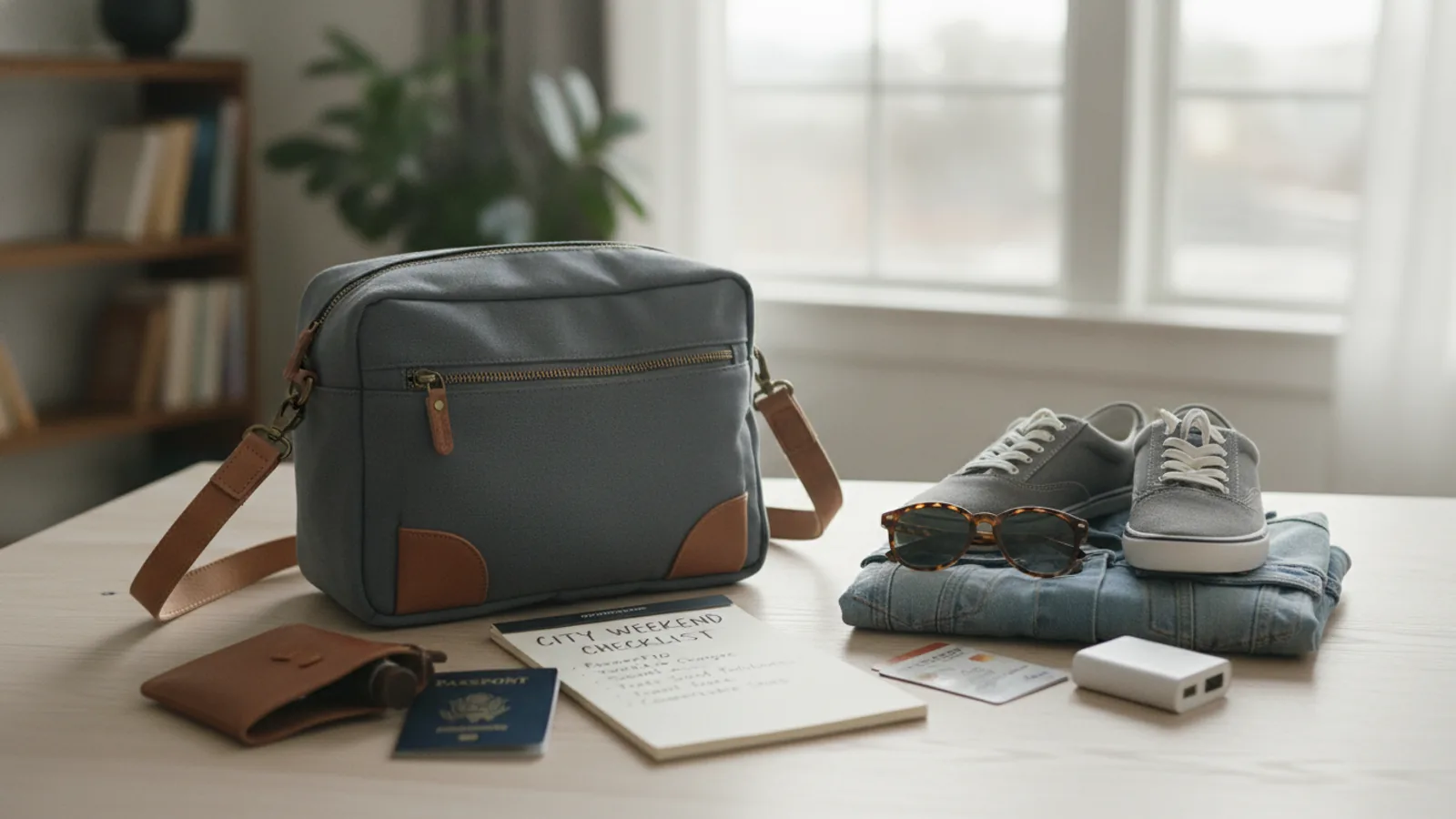
- Choose a compact crossbody bag with multiple compartments and a secure zipper, then pack only the day's essentials: phone, wallet, keys, small pouch for toiletries, reusable water bottle, light layer, and a portable charger.
- Wear the bag across your body, adjust the strap so it rests at your hip, and keep the zipper pulls facing forward so you can see and feel them at all times.
Before You Start
- List your planned activities, such as museums, parks, or public transit, to decide which items you truly need—this prevents overpacking.
- Select a bag with at least two separate compartments: one for frequently used items (phone, transit card) and another for valuables (wallet, keys), reducing time spent digging.
- Gather small organizers like pouches or zippered cases to group loose items (cables, lip balm, hand sanitizer) so they stay contained and easy to find.
- Test your bag's zippers and closures while wearing it, making sure they operate smoothly with one hand, so you can secure items while on the move.
Step-by-Step Instructions
Choose the Right Bag Size and Style
First, select a crossbody bag that is compact yet spacious enough for your daily essentials. Aim for a bag that measures roughly 8 to 10 inches wide and 6 to 8 inches tall, with a depth of 2 to 4 inches. This size holds a phone, a slim wallet, keys, a small pouch, and maybe a light layer without feeling bulky. When you try the bag on, check that it sits comfortably against your body without pressing too hard, and that the strap is adjustable. A padded strap is a plus because it spreads weight evenly over your shoulder. Also, choose a bag with at least one exterior pocket—this lets you store a transit card or lip balm for quick access. The style should be simple and durable, using materials like nylon or canvas that resist wear. Avoid bags with excessive logos or flashy hardware, as they draw attention. For a weekend outing, you want a bag that is easy to grab and go, leaving your hands free. Finally, consider the closure: a zippered main compartment is essential for security. This step matters because selecting the right size prevents you from carrying unnecessary weight, and the closure type affects how quickly you can access your items.
Pack Only What You Need for the Day
Lay out everything you think you need for a day out, then cut it down by half. For a city weekend, your core list is: your phone, a slim wallet with only essential cards and a little cash, your keys, a small pouch with lip balm, hand sanitizer, pain reliever, and a folded tote bag for unexpected purchases. If you expect long walks, add a reusable water bottle, but only if it fits without making the bag bulge. Also, carry a portable charger and a short cable, but only if you will be away from a power source for more than a few hours. Do not bring a heavy book, a large umbrella, or extra shoes. If you need a layer, wear it or tie it around your waist. The goal is to keep the bag light—ideally under three pounds when full. To test, pick up the bag and walk around for a minute; if it feels heavy or awkward, remove something. A practical check is to think about each item and ask: Will I use this at least three times today? If not, leave it. This reduces shoulder strain and makes it easier to move quickly through crowds. It also makes it faster to find items because there is less clutter.
Organize Compartments for Easy Access
Once you have your items, assign each a specific home inside the bag. Use the main compartment for larger items like a water bottle or a light jacket, but place it at the bottom so it does not crush smaller things. Use a secondary compartment, if available, for your phone and transit card, because you will reach for them often. Keep your wallet and keys in an interior zip pocket, not in the same compartment as your phone, to prevent a quick grab-and-run. If your bag lacks dividers, use small pouches to separate categories—for example, one pouch for cables and charger, another for personal care items. Place the most frequently used items in the easiest-to-reach spot, such as an exterior pocket or the top layer of the main compartment. The least used items, like an emergency bandage, can go at the bottom. Additionally, consider using a carabiner or clip to attach your keys to an internal key leash so they are never lost at the bottom. After packing, close all zippers and give the bag a shake; nothing should rattle or shift excessively. A practical check is to time yourself finding your phone in the bag from a closed position—if it takes more than three seconds, rearrange. This organization reduces fumbling and keeps you aware of your belongings.
Wear and Adjust the Strap Correctly
Put on the crossbody bag with the strap over one shoulder and the bag resting on the opposite hip. Adjust the strap so the bag sits at hip level—not too high under your arm, which feels restrictive, and not too low, which makes it swing. A good test is to walk a few steps; the bag should stay close to your side without bouncing excessively. If you are in a very crowded area, you can shorten the strap to bring the bag to the front of your body, which deters pickpockets. When you need something, rotate the bag to the front, unzip, and retrieve the item while keeping your eyes on your surroundings. Always keep the zipper pulls facing forward so you can see if they are closed. Avoid wearing the bag on your back, as that makes you vulnerable to theft. Also, if the strap is too long, you might feel unbalanced; adjust it until it feels secure. A practical check is to look in a mirror and see if the bag is in front of your center of balance—this reduces strain on your shoulder. Wearing it correctly not only enhances security but also prevents discomfort during long walks.
Secure Your Bag in Crowds and Transit
When you are in a busy market, on a packed subway, or at a festival, adjust how you wear your bag to deter theft. Move the bag to the front of your body, with the strap across your chest and the bag resting on your sternum. This position keeps the bag in your sight and makes it difficult for someone to open it from behind. Also, keep one hand on the strap at the bag's top when in extreme crowds, as a gentle grip lets you feel any attempt to pull or unzip. On public transportation, do not place the bag on an empty seat; keep it on your lap or tucked between your feet. When dining at an outdoor café, loop the strap around your leg or chair arm, so it is not easily grabbed. Another useful habit is to check the zippers periodically—after someone bumps into you or after leaving a tight spot, run your hand over the bag to ensure everything is closed. A practical check is to practice opening and closing the bag while it is on your body, so you become skilled at quick yet secure access. These habits reduce the risk of losing valuables and help you stay alert without being overly anxious.
Adapt Your Packing for Evening and Day Changes
A city weekend often includes both daytime exploration and evening activities. In the late afternoon, assess your bag and remove any items you no longer need, like a heavy water bottle or a map, to lighten the load. Add a foldable jacket or a small umbrella if the weather changes, but only if the bag can fit them without straining. For the evening, you might want to switch to a smaller crossbody bag if you have one, but if not, keep the same bag but consider transferring only the essentials: phone, wallet, keys, lip balm, and a compact comb. Your camera or extra charger can stay behind. Before heading out for dinner or a show, recheck the bag's strap and zippers. If you have time, reorganize the contents so that the items you will need most—like your phone for photos or a card for payments—are in the front pockets. A practical check is to think about the next activity: If you are going to a restaurant, you might not need your tote bag or sunscreen. Removing unneeded items not only makes the bag lighter but also reduces the chance of losing something because fewer items are rattling around. Also, be mindful of changes in your plan—if you decide to visit an unexpected museum, you may need to swap your water bottle for a small notebook. Staying flexible keeps your bag practical.
Quick Reference
| Situation | Action | Why it helps |
|---|---|---|
| You are entering a very crowded subway platform. | Move the bag to the front of your body, keeping one hand on the strap, and scan the area for any suspicious activity. | Keeping the bag in front makes it harder for pickpockets to access it, and your hand on the strap ensures you feel any tug. |
| You need your phone quickly for a photo of a street performer. | Unzip the main compartment with one smooth motion while the bag is still on your body, retrieve your phone, and immediately re-zip. | Practicing this motion allows you to capture moments without exposing the entire contents of your bag for an extended period. |
| It starts to rain suddenly during a walking tour. | Use your compact umbrella or put your phone and wallet into a waterproof pouch if you have one, then continue walking. | Protecting electronics and important items from moisture prevents damage and ensures they function for the rest of the day. |
Common Issues
- The bag strap keeps slipping off your shoulder.: Tighten the strap so the bag sits higher on your hip, and if it still slips, use a strap pad or choose a bag with a non-slip inner lining. Also, consider a bag with a slightly heavier strap that grips clothing.
- You cannot find small items like lip balm inside the bag.: Use small pouches or organizer inserts to group items. Attach a carabiner to your keys and use a dedicated pocket for small essentials. Simplifying your packing list also reduces clutter.
- Your bag feels too heavy by mid-afternoon.: Take a break, remove items you have not used, and place them in a locker or your accommodation if possible. Consider carrying less water and refilling a smaller bottle, or leave the portable charger behind if you are not using it much.
Advanced Tips
- Consider a bag with a hidden pocket along the back panel that lies against your body; store a backup card or cash there, and check it only when needed.
- Use a small carabiner to attach a hand sanitizer or lip balm to the exterior of the bag via the zipper pull, so you can access these items without opening the main compartment.
- Practice a 'zipper sweep' after every stop: run your fingers across all zippers to confirm they are closed, which becomes a habit and prevents accidental spillage.
Final Checklist
- Have you chosen a crossbody bag that is compact, secure, and comfortable for all-day wear?
- Is your bag packed only with items you will actually use, ensuring it remains light and organized?
- Is your bag worn in a way that allows easy access yet keeps your belongings safe in crowds?
- Have you practiced securing and accessing your bag in different situations, such as on transit or at a café?
FAQ
What should I do if my crossbody bag is too small for my water bottle?
Consider carrying a collapsible water bottle that can be flattened when empty, or use a clip to attach a small bottle to the outside of the bag. Alternatively, plan to refill a smaller bottle at water fountains. If you prefer to carry a standard bottle, you might need a slightly larger bag; focus on the size that fits your essentials and choose a bottle accordingly.
How can I prevent my bag from swinging when I walk or ride a bike?
Adjust the strap so it is snug—the bag should rest at your hip without swaying. For biking, shorten the strap further to keep the bag high on your chest. Some bags have a stabilizer strap that clips to your waistband; if not, you can use a small carabiner to secure the bag to a belt loop. Always ensure the main zipper faces your body to reduce movement.
Is it safe to keep my phone in the outer pocket of my crossbody bag?
Only if that pocket has a secure zipper or flap, and you are in a low-risk area. In crowded places, it is safer to keep the phone in an interior pocket, because outer pockets are easier for pickpockets to access. If you need quick access, use the outer pocket for items that are not high-value, like a transit card.